
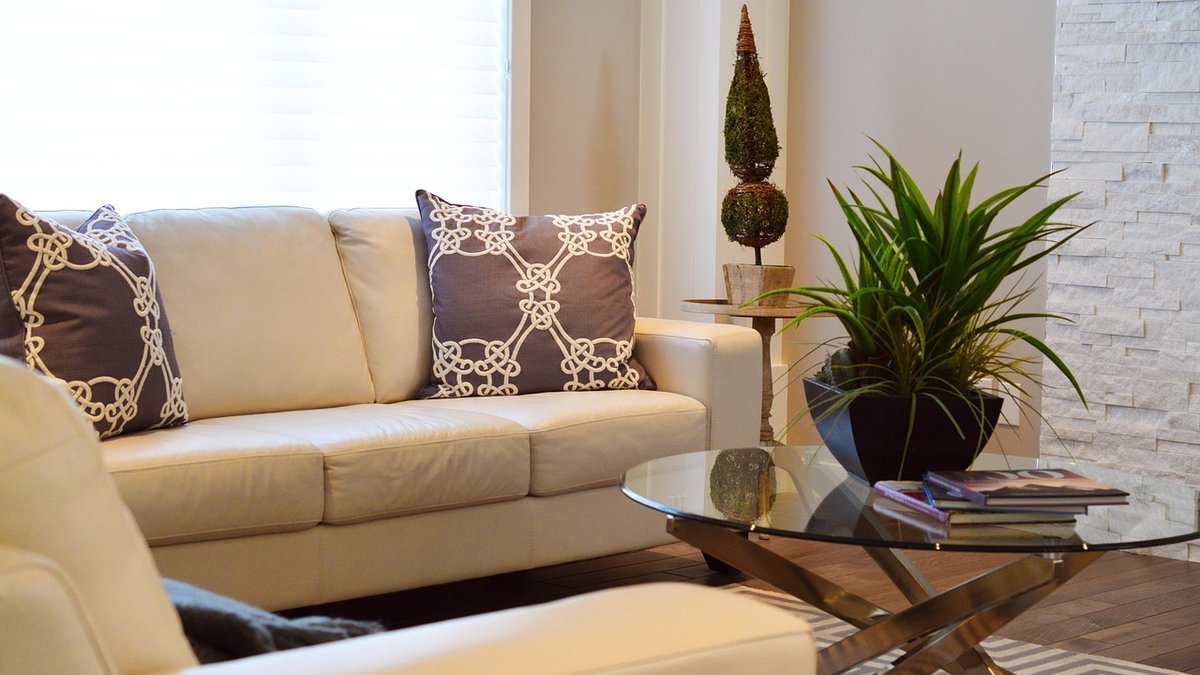
North-facing rooms have a reputation for feeling chilly, and it is not just your imagination. Light from the north carries a cool, blue-grey cast, and because it arrives without direct sun it stays soft and even all day. That evenness is a gift — no harsh glare, no stripes of sun crawling across the wall — but it also means colours never get the warmth boost that south and west rooms enjoy. A crisp white that looks fresh in a sunlit kitchen can read distinctly grey and slightly clinical in a north-facing bedroom.
The rule that follows is simple: choose colours that sit one or two steps warmer than you think you need. Warm undertones compensate for what the light is missing, so the room feels inviting rather than cold. Cool blues, icy greys and brilliant whites will only double down on the chill.
Before you fall for a dramatic accent, get the base right. Roughly 60 per cent of what you see in the room will be this base — walls, ceiling, large pieces of furniture — so it sets the temperature of everything else.
Look for soft creams, warm oatmeals, pale stones and bone whites with a yellow, red or ochre undertone. Test them against a sheet of pure white paper: if the sample looks slightly creamy, pinkish or sandy beside it, you are on the right track. If it looks blue or grey, keep looking.
Painting the ceiling the same colour as the walls, or one shade lighter, softens the boxy feel of a north-facing room and stops the ceiling looking dingy. A bright white ceiling above warm walls creates a hard contrast that rarely flatters.
Next come the mid-tones — the colours that give a north-facing room character without swallowing the light. Muted greens and gentle pinks are the two families that work hardest here.
For greens, aim for sage, olive, eucalyptus, moss and soft grey-green: anything with a yellow or brown base rather than a sharp blue one. For pinks, think plaster pink, blush, soft clay and faded terracotta-pink, which all carry warmth without turning sugary.
Use them on a single wall, inside alcoves, on cabinetry or on one large upholstered piece. Combining the two — sage walls with a plaster pink sofa, or pink walls with olive cushions — is one of the most forgiving pairings in a low-light room, because each softens the other.
Deeper colours are welcome in a north-facing room, but only once the base is warm. Used alone against cool white, a deep charcoal or forest green will look flat and shadowy. Sitting on cream and oatmeal, the same colour becomes rich and deliberate.
Good accents for this light include deep forest green, aubergine, teal-leaning navy, warm chocolate, and muted mustard or ochre. A simple 60/30/10 split works well: 60 per cent warm neutral base, 30 per cent muted mid-tone, 10 per cent deeper accent.
Colour shifts so much in north light that testing is not optional. Paint two coats onto A2-sized boards of lining paper, leaving a white border, and move them around over the course of a week.
Finally, a few practical touches do a great deal of quiet work. Choose warm-white bulbs around 2700K rather than cool daylight ones, and add two or three lamps at different heights so the room has layers of light after dark. Metallic finishes in aged brass, bronze or warm gold reflect light more kindly than chrome or polished nickel. Textiles in wool, linen, bouclé and jute add physical warmth, while a warm-toned wood floor or a jute rug will carry the whole scheme.
Get the base warm, the mid-tones muted and the accents few, and a north-facing room stops being the coldest room in the house — and quietly becomes the most restful.

Hi, my name is Anthony kuber. I am artist and fashion designer.
I love to travel and writing blogging.
Your email address will not be published. Required fields are marked *
Software Developer & Writer
Hey, I'm Diva, a developer and writer blending code and creativity. I'm driven by a deep curiosity and a relentless pursuit of excellence. Join me as I craft digital solutions and captivating stories.


